
Ball Brawl 3D - Soccer Cup
PanteonSports
4.42.02K Reviews
- Version
- 1.63
- Installs
- 10.00M
- Age Rating
- Everyone
Screenshots
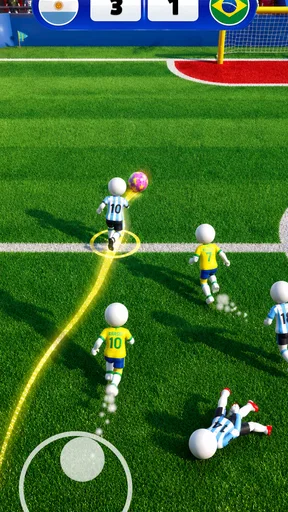
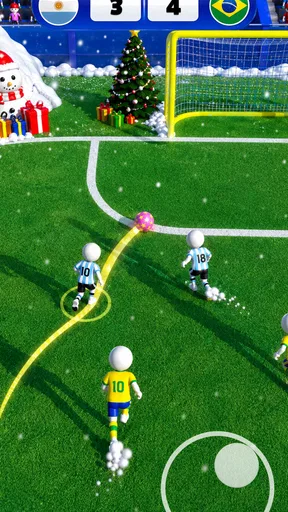
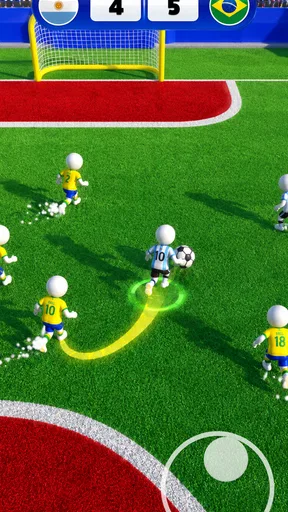
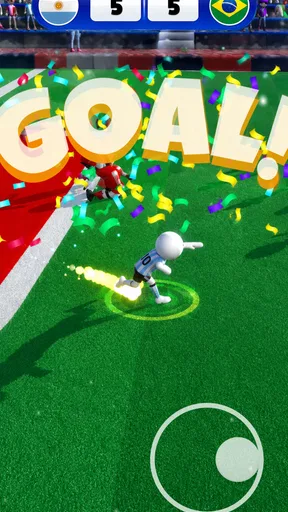
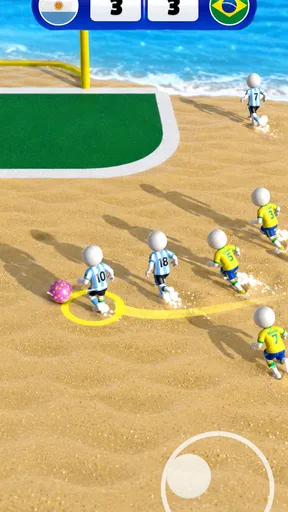
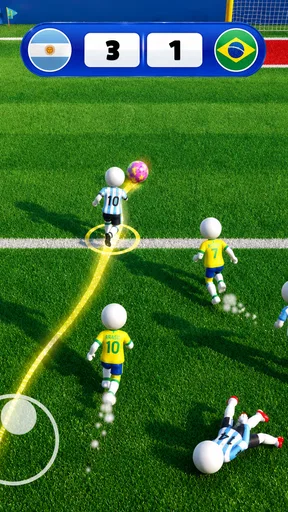
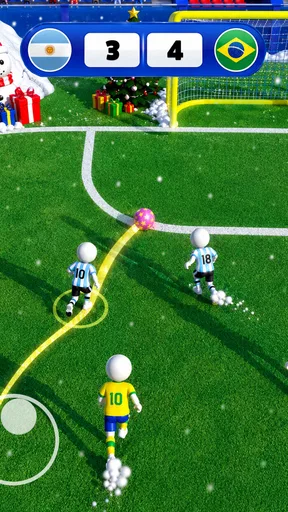
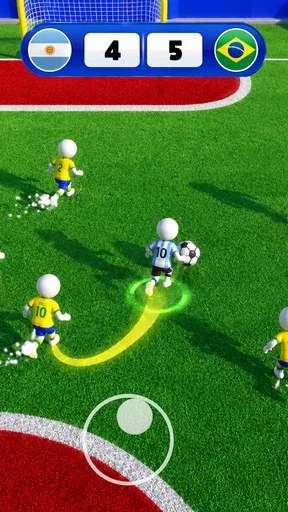
Our Review of Ball Brawl 3D - Soccer Cup
 Analysis by Appyee
I found Ball Brawl 3D - Soccer Cup most interesting as a quick, uncomplicated football game rather than a full simulation. It is a free sports game from Panteon, built around short moments of control and the simple appeal of trying to beat the opponent’s score. That makes it easy to understand almost immediately, but it also means the experience is narrower than what you get from a traditional football game with teams, tactics, leagues, and long matches.
After spending time with it, my main question was not whether it could replace a console-style soccer title. It cannot, and it does not seem designed to. The better question is whether you want a lightweight game that can fill a few spare minutes without demanding a large commitment. For that purpose, it has a clear identity. The important qualification is that its simplicity affects accessibility in both good and bad ways: there is less information to learn, yet fewer opportunities to adapt the experience to different needs.
How the game presents information and controls
The first thing I appreciated was the directness of the presentation. A game based on reaching a top score can communicate its central goal quickly, and I never felt that I needed to study a complicated rulebook before playing. The store summary describes it as a no-rules soccer game, which is a useful way to understand the tone: this is arcade football, not a careful recreation of a regulated match.
That simplicity helps with navigation. Someone who is unfamiliar with football games can approach it without first learning formations, player statistics, transfer menus, or a large set of commands. In practical terms, that makes it a better fit for a short break than many sports games that bury the actual play beneath several screens of setup.
There is a trade-off, though. A minimal structure can leave less room for players who rely on clear explanations, adjustable guidance, or a carefully organized progression. I would not choose this game for someone who wants every action explained in detail before they begin. Its appeal is strongest when you are comfortable experimenting and learning through play.
For readability, I found the focused objective more helpful than a crowded football interface would have been. The game does not ask me to track an entire squad, remember a long list of tactical instructions, or compare many layers of information at once. That reduces cognitive load during a quick session. On the other hand, anyone sensitive to small interface elements, fast transitions, or visually busy match scenes should try it directly on their own device before deciding that the simple rules make it comfortable.
The same point applies to navigation between sessions. Because this is a compact arcade experience, I would expect the best workflow to be: open the game, play a round, and stop when I have had enough. It suits that rhythm better than a game that expects me to maintain a season or return regularly to manage a club. If your goal is a deep career mode, this is the wrong kind of football game, regardless of how approachable its opening moments feel.
What the arcade format does well
The strongest design choice is the reduction of football to an immediate challenge. I can concentrate on the next action instead of thinking about eleven players, substitutions, stamina, or league tables. That is valuable for younger players and for anyone who finds conventional sports simulations overwhelming. The Everyone content rating also makes it a reasonable candidate for shared casual play in a family setting, although the actual comfort of the controls still depends on the player.
I also think this format works well for people who want a repeatable personal challenge. The top-score focus gives a session a natural purpose: try once, notice where the attempt went wrong, and try again. It is a different kind of motivation from winning a long match. You are not necessarily building a story; you are refining a small piece of performance.
One useful habit is to treat each attempt as a practice session rather than judging it only by the result. I pay attention to whether a miss came from rushing, poor timing, or difficulty reading the action. That approach makes the game more satisfying because the score becomes feedback instead of the only reason to continue. It is a small but important distinction for players who can become frustrated by repeated retries.
Motor demands and sensory comfort
The game’s accessibility for different motor abilities depends heavily on how comfortable the player is with its touch interactions. A short arcade football game can be easier than a full simulation because it asks for fewer types of input, but fewer commands do not automatically mean less physical effort. Timing, accuracy, and repeated gestures can still be demanding for someone with limited dexterity, tremors, pain, or fatigue.
I would approach it in short sessions if hand comfort is a concern. Playing while holding the phone in one position may be less tiring for some people than constantly changing grip, while others may prefer placing the device on a stable surface. The right choice depends on the player, but the general principle is useful: the game is more suitable for brief attempts than for a long uninterrupted session when repeated touch actions become uncomfortable.
Players with motor difficulties should also consider whether they can make accurate inputs without accidentally touching nearby screen areas. A simple game can be unforgiving if an action depends on a narrow timing window or a precise gesture. I would not assume that a small number of controls guarantees easy control. Testing a few rounds is more informative than relying on the genre label.
Sensory comfort is similarly personal. Sports games often use movement, contrast, sound, and quick visual feedback to make actions feel energetic. That can help some players understand what is happening, while it can overwhelm others. If you are sensitive to motion, flashing effects, loud audio, or rapid changes on screen, I recommend beginning with the device’s volume low and taking breaks whenever the display feels tiring.
A practical tip is to play in the lighting conditions where you normally use the phone. Glare can make a touch game harder to read, and a bright screen in a dark room can become uncomfortable quickly. This is not a special setting inside the game; it is simply a way to reduce avoidable strain. The same game can feel much more manageable when the screen is positioned well and the player is not fighting reflections.
Who can use it comfortably in everyday situations?
I see Ball Brawl 3D working best for a person who wants a fast football-themed diversion while waiting for an appointment, taking a short break, or relaxing after work. Imagine having ten minutes before a bus arrives: a lightweight score-focused game makes sense because you can begin without preparing a team or remembering a complicated campaign. If the bus arrives after one attempt, you can simply put the phone away.
It can also suit a player who enjoys repetition and personal improvement more than realistic presentation. Someone who likes chasing a better result may find the compact structure motivating. The game’s free price lowers the barrier to trying it, although optional in-app purchases range from under a dollar to amounts approaching fifty dollars per item. I would therefore recommend deciding in advance whether you are comfortable with optional spending, particularly if younger players may use the device.
For families, the Everyone age rating is reassuring as a starting point, but I would still supervise spending rather than treating the age label as a complete answer. The rating describes the intended content level, not whether every player will find the controls comfortable or whether the competitive loop will suit their temperament. A child who enjoys quick retries may love it; another may prefer a slower game with clearer progress and less pressure to improve a score.
Players who use a phone one-handed may find the game convenient if the important actions remain reachable, but I would not promise that it will work equally well for every hand size or grip. One-handed play can also make accidental touches more likely. If you usually use accessibility features such as enlarged system text, magnification, switch access, or voice control, compatibility may vary in ways that are best checked on your own device before committing time or money.
The game is available for devices running Android seven or later, so owners of older phones should check their operating system before searching for it. On supported hardware, the current version is 1.63. That gives Android users a straightforward compatibility checkpoint, but it does not tell me how comfortable the game will feel on every screen size or with every input preference.
Where it falls short for inclusive play
The biggest limitation is that the same stripped-down design that makes the game approachable can also make it less adaptable. A player who needs slower timing, larger controls, stronger contrast, reduced movement, alternative input, or more detailed instructions may find fewer ways to shape the experience around their needs. I would be cautious about recommending it as the only game for someone who depends on extensive customization.
Another barrier is the difference between understanding the objective and controlling it reliably. The goal may be easy to grasp, but success can still depend on quick visual processing and accurate motor response. That matters for players with slower reaction times, visual fatigue, coordination difficulties, or concentration limitations. A game can be conceptually simple while remaining physically demanding.
Score chasing can also be a mixed experience. It provides a clear reason to replay, but it may frustrate people who prefer cooperative play, story progression, or guaranteed advancement. If a player needs frequent positive feedback or dislikes repeating a challenge after a mistake, a more forgiving football game may be a better choice. I would skip this one if your ideal sports experience is about building a team over time rather than improving individual attempts.
Compared with a full soccer simulation, this game gives up realism, strategic depth, and the broader context of a match. That is not automatically a flaw. It is an advantage when you want immediate action, but a disadvantage when you want authentic rules, detailed tactics, or a sense of managing a club. Compared with other simple arcade sports games, its football theme may be the deciding factor, but the same lightweight structure means it may not hold your attention as long as a richer alternative.
There is also the question of spending. Since the game is free to download and includes optional purchases from $0.99 to $49.99 per item, I would review purchase controls before handing the phone to a child. For an adult, the sensible approach is to enjoy the free experience first and only consider spending if the game remains useful after several sessions. Paying does not change the fact that its core appeal is short, repeatable play rather than a large football career.
My inclusive verdict after using it
Panteon has made a focused sports game that is easy to approach when I want a quick challenge and do not want the management overhead of a conventional soccer title. Its average rating is 4.4 from around 54 thousand ratings, and it has passed over 10 million installs, which reflects broad interest without changing the more personal question of whether its control style suits you.
I would recommend it to casual football fans, score chasers, younger players within the Everyone rating, and people who prefer a game that explains itself through immediate action. It is especially useful in short, interrupted situations because it does not ask me to commit to a full match or a long campaign. The best way to get more from it is to treat each attempt as a small experiment: slow down when possible, notice which actions cause mistakes, and stop when your hands or eyes need a break.
I would be more careful recommending it to players who need extensive accessibility options, who have difficulty with rapid touch input, or who are looking for realistic football strategy. In those cases, a game with adjustable controls, slower pacing, alternative input methods, or deeper tactical menus may be a better fit. Its strongest form of accessibility is simplicity, not customization.
My final view is positive but specific. This is a good free arcade football option when the goal is a quick score-based session, and its broad availability makes it easy to try on a supported Android device. It is not the right choice for every ability or context, and I would not mistake its straightforward rules for universally easy play. If you understand that trade-off, it becomes much easier to decide whether this compact soccer challenge belongs on your phone.
Verdict
Strengths of Ball Brawl 3D - Soccer Cup
- Quick matches are ideal for short gaming sessions.
- Simple controls make it easy for new players to start.,3D arenas add more visual depth than basic soccer games.
- Progression gives matches a rewarding sense of purpose.
- Offline play is convenient when no connection is available.
Limitations of Ball Brawl 3D - Soccer Cup
- Gameplay can feel repetitive after several matches.
- Opponent difficulty may become uneven as you advance.
- Ads can interrupt the flow between games.
- Limited tactical options reduce strategic variety.
- Touch controls may feel imprecise during crowded plays.
Other Releases by Panteon
View All
Raid Rush: Tower Defense TD
Strategy4.1

Stack Sort: Color Puzzle
Puzzle4.6
Similar Picks in This Category
View All
8 Ball Pool
Miniclip.com4.8

Pooking - Billiards City
AIM TOP GAME TECHNOLOGY LIMITED - pool4.6

Carrom Pool: Disc Game
Miniclip.com4.4

EA SPORTS FC Soccer Mobile 26
ELECTRONIC ARTS4.6

World Soccer League
mobirix4.3

Soccer Cup 2026: Football Game
INLOGIC SPORTS - football tennis golf soccer4.3
Frequently Asked Questions
What is Ball Brawl 3D - Soccer Cup?
Ball Brawl 3D - Soccer Cup is a casual, arcade-style soccer game focused on quick matches and simple controls rather than full-scale football simulation. You guide your player, compete against opponents, and try to score while dealing with exaggerated physics and colorful 3D environments. It is designed for short play sessions and is generally easy for new players to understand.
How do you play Ball Brawl 3D - Soccer Cup?
Gameplay is built around straightforward touch controls that let you move, aim, kick, and challenge opposing players. Matches are usually fast-paced, so timing is important when attempting a shot or trying to stop an opponent. The controls are accessible for beginners, although later matches may require better positioning, quicker reactions, and more careful use of the available actions.
Does Ball Brawl 3D - Soccer Cup require an internet connection?
The game may allow some basic gameplay without a constant internet connection, which is useful when you want to play during travel or away from Wi-Fi. However, certain features can depend on connectivity, including advertisements, rewards, updates, or online-related content. Requirements may also vary between Android and iOS versions, so checking the store listing is recommended before downloading.
Is Ball Brawl 3D - Soccer Cup free to download?
Ball Brawl 3D - Soccer Cup is generally offered as a free download, allowing players to try the core soccer gameplay without paying upfront. Like many free mobile games, it may include advertising and optional purchases, such as items, bonuses, or ways to progress more quickly. Review the in-app purchase information and device permissions before confirming the installation.
Is Ball Brawl 3D - Soccer Cup suitable for children?
The game is generally approachable for children because its rules are simple, matches are short, and the presentation is colorful rather than realistic or violent. Nevertheless, parents should check the age rating for their region and review advertising and in-app purchase settings. If children use the device independently, enabling purchase restrictions can help prevent accidental spending.
Play our best games!


